
Manheim Township City Directory Collections
The strongest verified starting point for a Manheim Township city directory search is the digitized Lancaster City and County series. LancasterHistory identifies it as a county-and-city collection, split into 1843-1900, 1901-1914, and 1914-1922 groups. That wording matters. The collection is valuable for township research near Lancaster, but no source reviewed establishes a standalone township edition. Check a volume's title page and its geographic scope before treating a name or street as township evidence.
| Historical source | Verified span | Custodian | Research route |
|---|---|---|---|
| Lancaster City and County directories | 1843-1922 | LancasterHistory and POWER Library | Digitized, searchable or browsable collection |
| Lancaster Public Library directory volumes | Individual years not stated | Lancaster Public Library | Local History microfilm, with volume scope checked in person |
| Lancaster County census | 1790-1930 | Lancaster Public Library | Local History microfilm for dated household comparison |
| Historic maps and Sanborn material | Individual township years unverified | LancasterHistory and County Archives | Catalog or Archives route before claiming a sheet covers an address |
Later directory microfilm is a local-library route, but the public collection description does not state its individual years. The same caution applies to publisher names and a final print year. Those details belong to a live title page or catalog record, not a guess drawn from a search result.
Manheim Township Directory Years Online
POWER Library's LancasterHistory collection is the online doorway for the verified 1843-1922 run. Browse or search the three date groups, then preserve the precise volume date with any name found. A directory search can surface a spelling variant, an address, or a business association. It should not be used to state that every Manheim Township household appears in every year.
- 1843-1900: the first verified digital group in the Lancaster City and County collection.
- 1901-1914: the second documented digital group.
- 1914-1922: the third documented digital group and the end of the verified online run.
The POWER Library collection landing page identifies the digitized city-directory route for Manheim Township research.
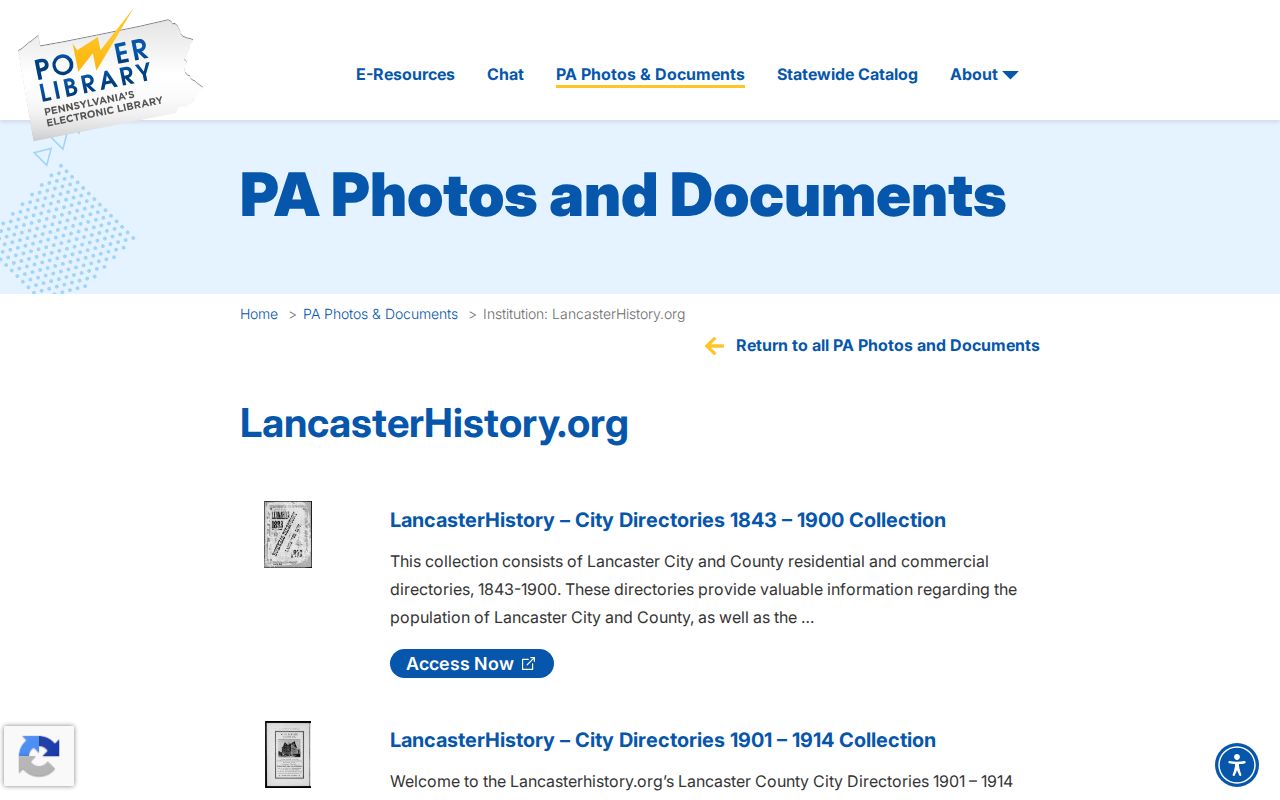
The screen confirms the collection destination, while the volume itself remains the place to confirm coverage, layout, and the exact printed wording.
A disappearance from one volume is not a conclusion. The person may have moved, been omitted, used a variant name, or fallen outside that volume's scope. Compare nearby years and a second historical source before closing a Manheim Township historical-directory search.
Manheim Township Library Directory Shelf
Lancaster Public Library Local History adds the physical and microfilm path. Its collection lists historical Lancaster volumes, county census microfilm from 1790-1930, newspapers, local histories, atlases, selected church and cemetery records, passenger lists, and yearbooks. This makes the library a practical place to compare a directory finding with a dated census reel or a newspaper notice instead of relying on a single index.
Lancaster Public Library's Local History collection is the source for its directory, census, newspaper, and yearbook holdings.
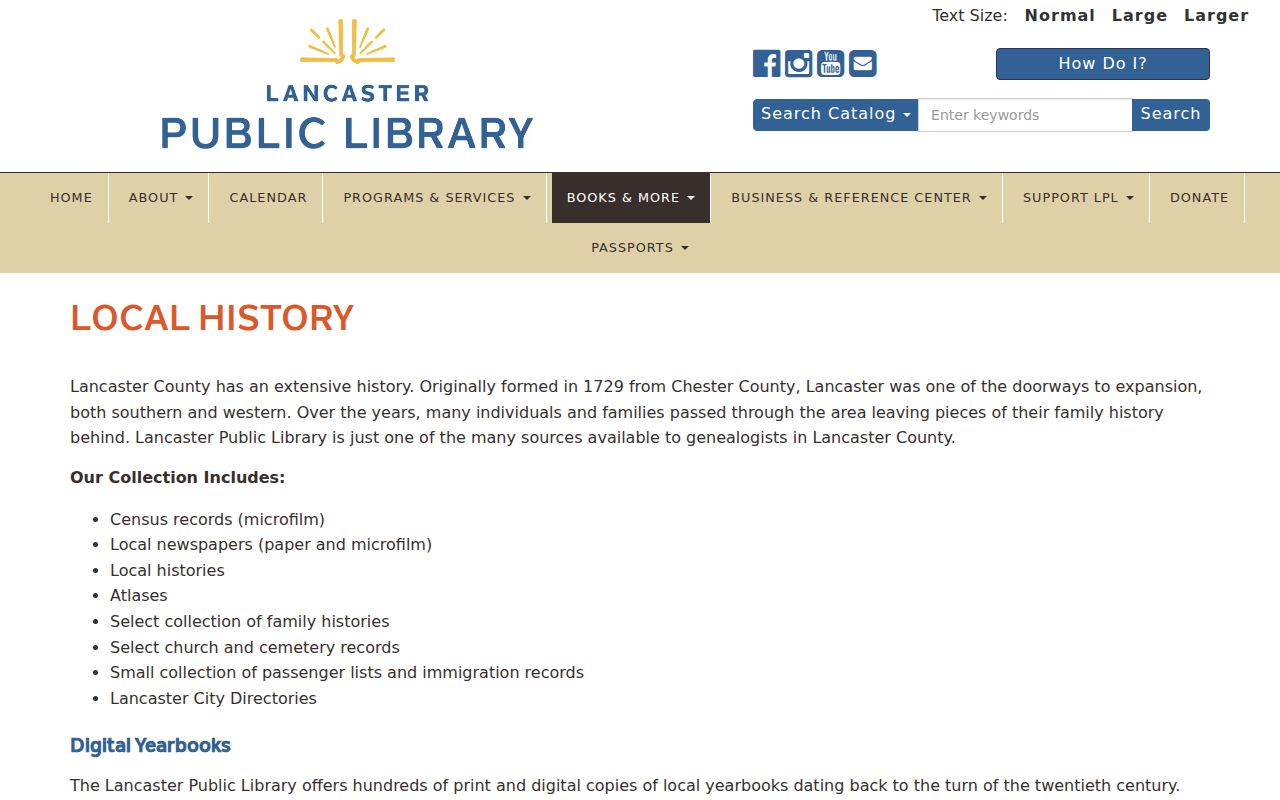
Library holdings give a Manheim Township historical-directory search an in-person alternative when the digitized run does not answer a date or coverage question.
Manheim Township High School is named among the library's yearbook holdings. That supports a dated former-classmate or neighborhood-history search, but it does not establish that a digital volume exists for a particular class year. The library's print and digital yearbook descriptions should be read separately.
Note: The library's public page verifies collection types, but not every directory year or every Manheim Township volume.
Checking Manheim Township Volume Scope
Manheim Township borders Lancaster City, and its postal labels can be Lancaster 17601 or Lititz 17543. Neither label proves municipal jurisdiction. The township is county district 390, while Manheim Borough is district 400. Lancaster City also annexed township land from 1931 through 1952, leaving irregular boundaries and township islands. A directory hit therefore needs a place check before it becomes part of a township household trail.
The township's local geography makes the title-page check more than a formality. An older volume may be centered on the separate city, on the county, or on a selected area. Preserve the place name exactly as printed, and do not silently convert a Lancaster or Lititz label into a township location. A parcel field or historic legal description supplies a better jurisdiction check than a postal label.
Use the County assessment Township/Municipality field and the mapped parcel boundary in LanCo View for the modern municipal check. For older material, retain the printed place label, the historical legal description, and the directory title-page scope. Historic maps can supply land context, but a map alone does not convert an old road description into a current street number.
Reading Manheim Township Directory Evidence
No accessible official landing page displayed a real local entry, so this Manheim Township directory research route does not invent one. When opening a live volume, record only what is actually printed. The checklist below prevents a common error: turning a possible abbreviation or a partial address into a confident statement about a person or household.
| Printed name | Copy initials, spelling, and any variant exactly as shown. |
|---|---|
| Family notation | Record spouse or widow notation only if the volume actually prints it. |
| Address and printed detail | Preserve the address and any other relevant wording only as it appears in the volume. |
| Mark or symbol | Check whether the volume uses a notation and copy its abbreviation key before interpreting it. |
| Arrangement and scope | Note alphabetical or street order, publication date, coverage date, and geographic coverage. |
- Criss-cross directory
- A directory arranged by street and address rather than only by name. Its presence must be verified in the individual volume.
- Householder index
- An index that identifies a household head or address, when the volume supplies one.
- Abbreviation key
- The printed legend that explains shortened labels. Photograph or transcribe it before interpreting an entry.
That restraint is especially important with old spellings. County Archives notes that historic indexes can reflect clerk-interpreted spellings, so a surname search should include plausible variants rather than assuming one form is complete.
Pairing Manheim Township Directory Volumes
A Manheim Township directory volume becomes more useful when it is paired with a source of a different type. Start with a clearly dated volume, then use the closest available federal census reel at Lancaster Public Library. The library's county census microfilm reaches from 1790 through 1930. Directory and census evidence should agree on a broad household and location pattern, not be forced to match every name, spelling, or address detail.
- Confirm that the directory volume can include the target township or nearby county area.
- Copy the printed name, address, date, page, and any abbreviation key that affects the reading.
- Check the nearest available census year at the Local History collection and log each source separately.
- Use newspaper, church, cemetery, or obituary material to test a move, death, or family connection.
- Follow a property question to the recorded deed chain rather than treating a directory as proof of ownership.
For a backward address trail, the Manheim Township past residents research route uses the same historical sources after the parcel and deed reference have been identified. The two methods meet at the address, but the directory volume and the recorded land trail answer different questions.
Note: Keep the source date beside every finding, because a directory date and a census date represent different moments.
Manheim Township Historical Map Context
LancasterHistory's collections page describes a deeper archival layer: a 16,000-volume library, extensive church records and county newspapers, historic maps including Sanborn material, digitized newspapers, and the city-and-county directory collection. County Archives also lists historic map routes for eighteenth-century warrants and the years 1824, 1864, 1875, and 1899. Map evidence adds land and road context; exact Manheim Township Sanborn sheet years must be confirmed in the catalog.
LancasterHistory's directory and collections page documents the historical materials that can support a finding in a dated volume.
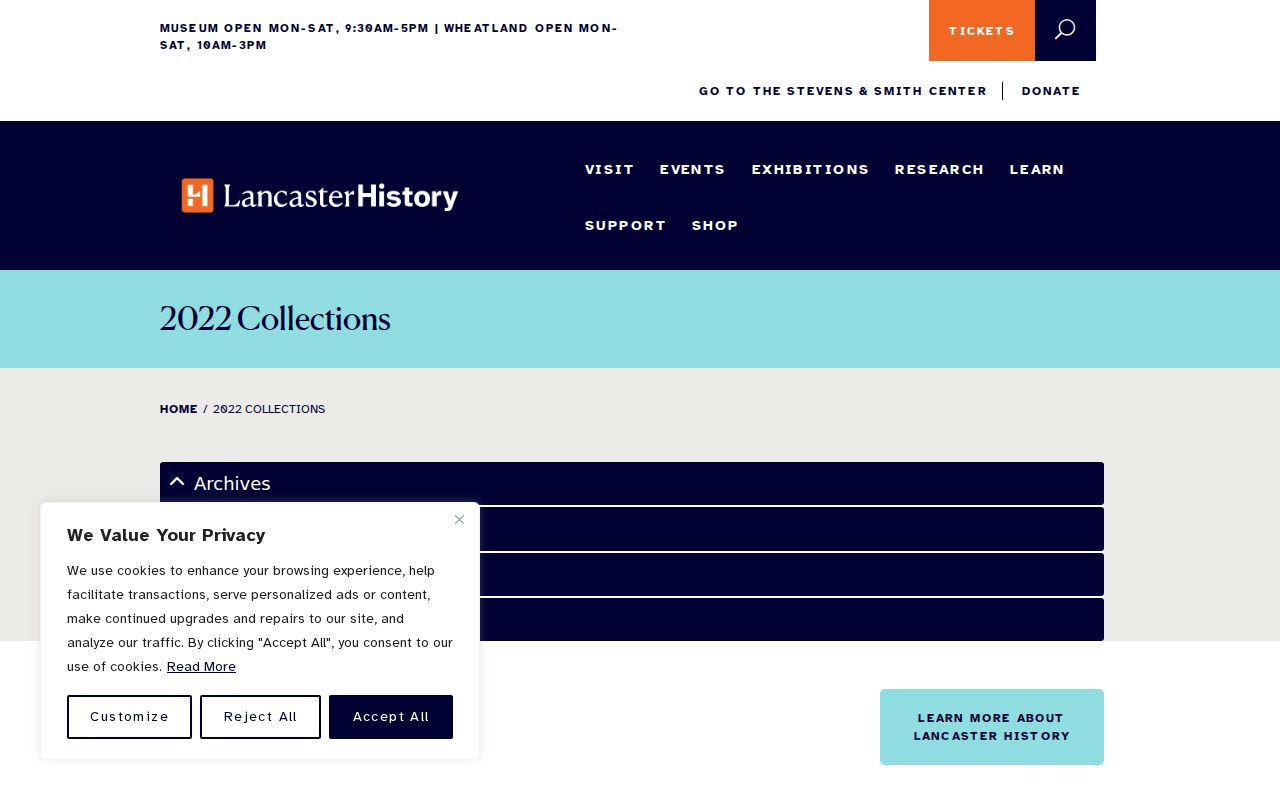
The LancasterHistory collection supplies a researched next step for maps, church records, newspapers, and directory context without claiming a particular source covers every township address.
Manheim Township Historical Research Requests
When a catalog name or directory page needs a professional check, LancasterHistory Research Center accepts questions at research@lancasterhistory.org and 717-392-4633 ext. 126. Its stated genealogy request service is limited to a single Lancaster County name. That is a useful way to frame a focused family-history request, especially after recording the directory date, page, spelling variants, and the collection name.
The organization reports that it can provide photocopies or PDFs of historic county-government documents, city records, and obituaries. It also has online catalog and finding-aid routes that can reveal collection names before an appointment. A narrow request has a clearer path than an open-ended request to identify all people connected with a place.
Before contacting the Research Center, collect the exact volume date, page number, printed spelling, possible surname variants, and the question that remains. LancasterHistory's description of more than 600 manuscript groups, extensive county newspapers, church records, maps, and 16,000 volumes shows why a directory result can be expanded carefully. It does not authorize a broad search for every person associated with an address. A record request is stronger when it names one historical question and the source already consulted.
County Archives is another historical route when a county-office index points to a deeper record group. Its materials describe deeds, wills, commissioners' minutes, historic indexes, and fragile originals that may also be available on microfilm. An Archives inquiry should include the collection or index reference and a specific time frame. Staff can check available indexes for a defined request, but the source notes that it does not perform open-ended research.